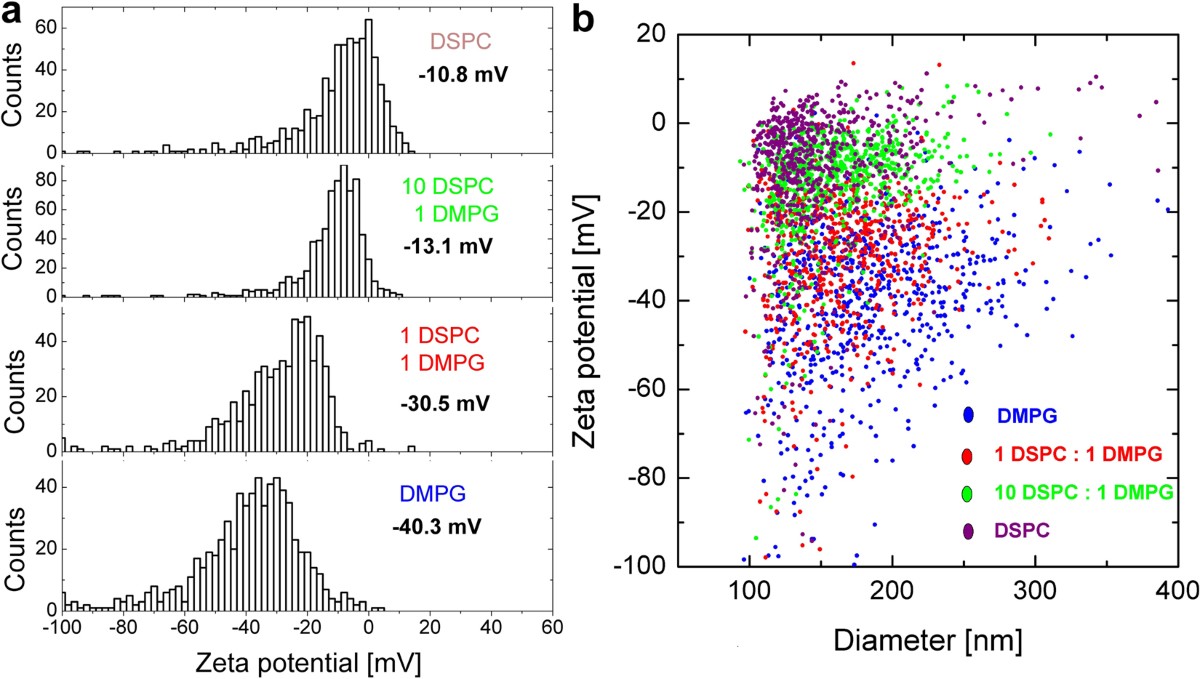
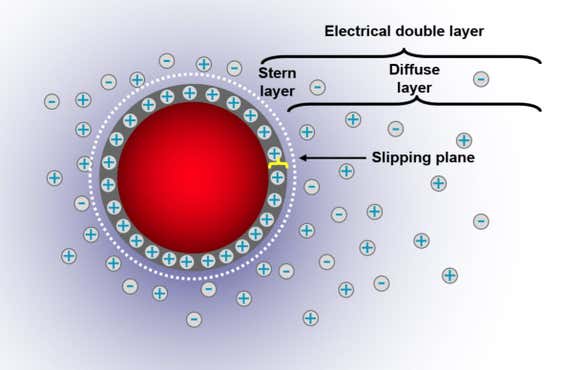
Zeta Potential measurements quantify the electrokinetic potential at the slipping plane and reflect effective charge under specific pH and ionic conditions. They are context‑dependent and affected by ionic strength, adsorbed layers, and sample heterogeneity. Combining zeta data with hydrodynamic sizing, microscopy, and surface spectroscopy clarifies aggregation state, morphology, and chemical functionality. Modeling of interaction energetics (DLVO and extensions) links measurements to stability. Continue for workflow guidance, practical controls, and case examples that unify interpretation.
Fundamental Principles of Zeta Potential and Its Limitations
Rooted in electrokinetic theory, zeta potential quantifies the electrical potential at the slipping plane between a solid surface and its diffuse ionic layer, serving as a primary indicator of colloidal stability and particle–surface interactions. The metric links surface chemistry, ionic strength, and shear plane position, reflecting effective charge distribution rather than true surface charge. Interpretation demands control of experimental variables; pH, conductivity, and electrolyte composition alter the slipping plane and results. Awareness of measurement artifacts—electrophoretic mobility biases, electrode polarization https://laballiance.com.my/, and sample heterogeneity—is essential. Users must document conditions, apply corrections, and treat zeta potential as a context-dependent parameter.
Complementary Size and Aggregation Measurements
Hydrodynamic size measurements provide a quantitative correlate to zeta potential, clarifying how surface charge influences effective particle diameter under given conditions. Comparative analysis of aggregation kinetics complements this by revealing the time-dependent consequences of interparticle electrostatic interactions. Together, size and aggregation data enable a more rigorous interpretation of stability trends than zeta potential values alone.
Hydrodynamic Size Correlation
In correlating zeta potential with particle behavior, hydrodynamic size measurements provide a complementary perspective on colloidal stability by quantifying the effective diameter and aggregation state under relevant conditions. Measurements link electrophoretic mobility-derived surface charge to hydrodynamic metrics, enabling inference of Colloidal diffusion limitations and transport regimes. Size polydispersity metrics contextualize mean diameter, revealing subpopulations that alter interaction potentials despite similar zeta values. Controlled protocols—consistent ionic strength, temperature, and shear—are required for reproducible comparisons. Combined interpretation highlights when charge-based stabilization is overridden by steric or size-distribution effects, guiding formulation adjustments and diagnostics without invoking kinetic pathway analysis.
Aggregation Kinetics Comparison
Compare aggregation kinetics by pairing time-resolved size measurements with zeta potential trends to delineate how charge-mediated forces influence aggregation rates and mechanisms. The approach quantifies collision dynamics and links size evolution to surface charge shifts, enabling calculation of effective reaction rates under defined ionic strength and pH. Data fitting distinguishes diffusion-limited from reaction-limited regimes, revealing when electrostatic repulsion slows aggregation despite frequent collisions. Controlled perturbations (salt, pH, shear) validate models and parameter sensitivity. Reporting includes temporal size distributions, zeta potential trajectories, fitted rate constants, and confidence intervals to support reproducible control over aggregation pathways.
Surface Chemistry and Composition Techniques
Focusing on surface chemistry and composition techniques clarifies how interfacial properties govern zeta potential behavior and particle stability. Surface functionalization strategies and chemical mapping provide quantitative insight into charge distribution, ligand density, and counterion adsorption. Spectroscopic methods (XPS, FTIR) identify functional groups and oxidation states that shift electrophoretic mobility; elemental analysis and ToF-SIMS resolve heterogeneity critical to reproducible measurements. Controlled surface modification informs pH-dependent titration and ionic strength studies, enabling predictive models of double-layer structure. Integrating these compositional data with zeta potential measurements yields actionable parameters for formulation control and surface engineering.
Morphology and Structural Imaging Methods
Complementing compositional analyses, morphology and structural imaging methods define the physical context in which zeta potential arises by resolving particle size, shape, surface roughness, porosity, and aggregate architecture across length scales. Electron microscopy provides high-resolution visualization of particle outlines, crystallinity, and interparticle contacts, enabling quantitative size and aspect-ratio metrics. Atomic force microscopy maps topography and nanoscale roughness, offering height profiles and force-mode contrast relevant to surface accessibility. Combined, these techniques inform interpretations of electrokinetic measurements by linking geometric factors to double-layer overlap and hydrodynamic behavior. Rigorous imaging protocols and quantitative image analysis guarantee reproducible inputs for zeta potential correlation.
Probing Interactions and Energetics
The section examines electrostatic interaction mapping to quantify spatial charge distributions and their influence on particle pairing and aggregation. It then correlates these maps with measured surface energies to identify energetic drivers of adsorption and detachment phenomena. Together, these analyses provide a framework for predicting interfacial stability under varying chemical conditions.
Electrostatic Interaction Mapping
By mapping electrostatic interactions across particle surfaces and surrounding media, researchers can quantify interaction strength, spatial distribution, and energy barriers that govern colloidal stability and aggregation pathways. Electrostatic mapping combined with zeta potential measurements delineates local charge heterogeneities and identifies regions prone to attraction or repulsion. Quantitative fits to DLVO-like frameworks, adjusted for ionic screening, yield interaction energy profiles and critical separation distances. Spatially resolved data inform controlled modification strategies: targeted functionalization, salt titration, or pH adjustment to shift energy barriers. This methodology enables predictive control over aggregation kinetics and stability envelopes without reliance on bulk-averaged assumptions.
Surface Energy Correlations
Across heterogeneous interfaces, surface energy correlations quantify how local physicochemical attributes—charge density, chemical functionality, roughness, and hydration—co-vary with interaction energetics to determine adhesion, wetting, and aggregation behavior. Surface energy links zeta potential maps to macroscopic observables via Contact angles and measured Interfacial tension; Inverse gas chromatography resolves dispersive and polar components. Correlative analysis isolates contributions from electrostatics, van der Waals, and specific adsorption, enabling predictive control of coating, formulation, and separation. Quantitative protocols pair high-resolution mapping with bulk measurements to validate models and set actionable parameters for process optimization and failure mitigation.
| Parameter | Measurement |
|---|---|
| Surface energy | Inverse gas chromatography |
| Wetting | Contact angles |
| Adhesion | Interfacial tension |
| Energetics | Zeta potential mapping |
Practical Workflows for Multi-Technique Characterization
When combining zeta potential measurements with microscopy, scattering, and spectroscopy, practitioners should define complementary objectives, sequence techniques to minimize sample perturbation, and establish common metrics for comparison. Workflows prioritize sample throughput and data standardization, specifying acceptable handling, solvent conditions, and deposition protocols. A modular sequence maps noninvasive to invasive steps, reserving destructive assays last. Metadata schemas capture instrument settings, calibration, and uncertainty propagation. Automated pipelines enable batch processing and flag anomalies for manual review. Acceptance criteria govern when multi-technique datasets are combinable. Decision trees and SOPs guarantee repeatability, permit controlled trade-offs between depth of analysis and operational capacity.
Case Studies Demonstrating Integrated Analysis
In illustrative case studies, integrated zeta potential analysis demonstrates how complementary techniques—microscopy, scattering, and spectroscopy—resolve ambiguities arising from single-method measurements. Case examples compare nanoparticle surface modification, emulsion stability, and formulation aging. Combined datasets pinpoint charge heterogeneity, correlate morphology with electrophoretic mobility, and detect adsorbed layers missed by one method alone. Results guide process adjustments, anticipate scale up challenges, and quantify risk vectors relevant to production. Documentation aligns analytical conclusions with regulatory implications, enabling defensible specifications. The case studies emphasize targeted measurement selection, reproducible protocols, and decision rules that translate multi-technique insight into controlled, compliant development pathways.
Conclusion
Integrating zeta potential with complementary characterization techniques yields a more complete, reliable understanding of colloidal systems than any single method alone. By combining electrokinetic measurements with size, compositional, morphological, and interaction-energy analyses, researchers can resolve ambiguities, validate interpretations, and link surface charge to structure–function relationships. Practical, workflow-driven integration enhances reproducibility and enables targeted problem solving across formulation, stability, and materials design, fostering robust experimental conclusions and efficient translation of insights into application.